Right now, in Metro Manila, renting usually wins on cash — and any agent who tells you otherwise is selling, not advising. Vacancy is heading to a record 25.6%, rents are flat or falling, and a ₱5.89M one-bedroom costs about ₱44,700 a month once the bank loan, dues and property tax are counted. Renting the same thing costs ₱22,000–25,000. Over ten years the buyer ends up ahead by roughly ₱36,000 — a rounding error, not an argument. Buying wins on a different axis entirely: at year 20 the payments stop, and a renter's never do.
I am going to lose some commission by writing this.
Every month I talk to people paying ₱25,000 for a 28-square-metre one-bedroom, and every month at least one of them says the same sentence: "Sayang naman, parang itinatapon ko lang ang pera ko." It feels like throwing money away.
That line has sold a lot of condos. It is also, in September 2026, mostly wrong — and you deserve to hear that from the person who'd earn the commission rather than from a spreadsheet you build at 1am.
So let's do this properly. Real units off the price list I actually work from, real bank rates, real dues. Then I'll show you the one column nobody in my industry puts in the comparison, and you can decide what to do with it.
The Number Your Agent Won't Lead With
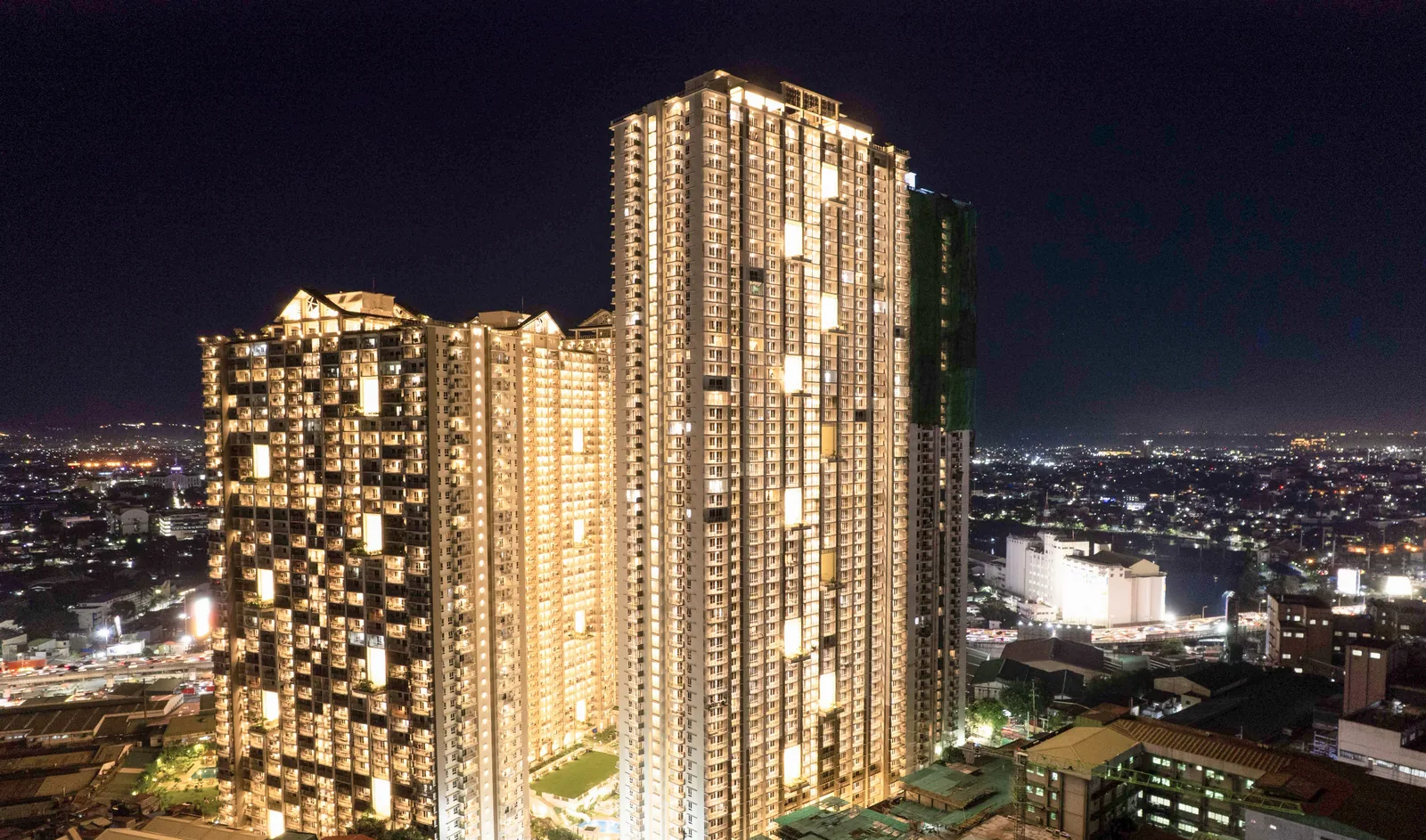
Here is a real unit. Allegra Garden Place, Pasig Boulevard, Bagong Ilog — 110 metres from Rizal Medical Center. Finished, occupied, you can walk into it this week. A 30-square-metre one-bedroom at ₱5,886,000.
The way this gets pitched to you is: twelve percent down, thirty-two months, ₱20,914 a month. Less than your rent! And that part is true.
It is also only the first thirty-two months. Here is the whole thing.
| What you actually pay | Monthly | When |
|---|---|---|
| Reservation fee | ₱30,000 | Once, on signing |
| 12% downpayment ÷ 32 months | ₱20,914 | Months 1–32 |
| Bank amortisation on the 88% balance | ₱39,756 | Months 33–272 |
| Association dues (est.) | ₱3,000 | Forever |
| Real property tax (est.) | ₱1,942 | Forever |
| True monthly cost, from month 33 | ₱44,699 | For twenty years |
Computed from DMCI's September 2026 price list, net of the 1% discount attached to the 12% downpayment term, after deducting the ₱30,000 reservation fee. Bank amortisation at 7.00% over 20 years — Philippine housing loans currently run roughly 6.25%–8.25% depending on bank, fixing period and borrower profile. Dues and tax are estimates and vary by property; ask me for the exact figures on any specific unit.
Forty-four thousand, seven hundred pesos. To live in thirty square metres.
Your landlord is charging you twenty-two.
Ten Years, Two Households
Fine, you say — but the renter ends up with nothing. Let's test that, because it's the part everyone asserts and nobody calculates.
Two people. Same unit, same building. One buys it, one rents something equivalent at ₱25,000 with no increase, which is exactly what this market is currently delivering. Ten years later:
| Cash paid out | What they hold | Net position | |
|---|---|---|---|
| The buyer | ₱4,790,908 | ₱1,827,119 equity | −₱2,963,789 |
| The renter | ₱3,000,000 | ₱1,790,908 cash | −₱1,209,092 |
Buyer's cash out = reservation + 32 months of downpayment + 88 months of amortisation + 120 months of dues and tax. Equity = principal repaid, excluding any appreciation. Renter's holding assumes they bank the monthly difference and earn nothing on it — a deliberately conservative assumption that flatters the buyer.
That is how far ahead the buyer is after a decade — and only if you count their equity at face value and give the renter zero return on the ₱1.79M they kept. Put that cash in anything at all and the renter wins outright.
Ten years. Two households. Essentially a tie.
So no — renting is not throwing money away. Renting is buying flexibility with money you would otherwise convert into a slow, illiquid asset. Whether that's a good trade depends on things a blog post cannot know about you.
Why Your Rent Stopped Going Up
There is a reason this comparison looks worse for buying than it did five years ago, and it isn't interest rates.
Metro Manila is oversupplied. Badly. Colliers expects vacancy to peak at 25.6% by the end of 2026 — a record — against 24.7% at the close of 2025. As of August 2026 there were roughly 82,900 unsold condominium units across the metro, up from 79,200 at the end of last year. Another 13,000 are scheduled to complete this year.
Landlords feel that before anyone else does. Units listed at ₱25,000 twelve months ago are being taken at ₱20,000 to ₱22,000 today, and lease rates are forecast flat through the year. If your rent hasn't moved since 2024, that is not your landlord being kind. That is a market with a quarter of its inventory empty.
Be careful with the phrase "the condo market." There isn't one. Bay Area vacancy hit 57.3% in Q4 2025 while Ortigas Center sat at 6.4%, with Makati CBD and Rockwell under 15%. Averages will lie to you in both directions.
So Why Would Anyone Buy?
Three reasons. None of them is "rent is dead money."
The payments stop. This is the real argument and it lives outside the ten-year window. At year twenty the buyer's ₱39,756 amortisation goes to zero and they carry ₱5,000 in dues and tax. The renter, at year twenty, is still paying rent — and will still be paying it at year thirty, and at seventy years old, at whatever the market charges then. Every honest rent-versus-buy comparison is really a question about how long your horizon is. Under ten years, rent. Past twenty, the arithmetic inverts hard.
You fix your housing cost. An amortisation is knowable for twenty years. Rent is renegotiated by someone else, on their schedule, forever. Right now that's working in your favour. It will not always.
Appreciation — maybe. I am not going to promise you this one. Capital values are soft and Colliers expects recovery to lag. If a unit appreciates, good. Do not build the decision on it.
The Column Nobody Shows You
Now the part I actually wanted to write.
Every rent-versus-buy article you'll find gives you two columns. There is a third, and it exists precisely because of the oversupply above — developers with finished, empty buildings would rather have you living in one than not.
DMCI's Home Advance programme lets you move into a finished unit and lease it while your bank financing is being processed, instead of waiting until drawdown to get the keys. Reserve, complete four months of downpayment, move in. You're not renting-with-a-maybe; you're a buyer occupying the unit you've already committed to.
The lease rates, current as of the October–December 2026 circular:
| Unit | Where | Size | Lease rate |
|---|---|---|---|
| Satori Residences · 1BR | Pasig | 24–40 sqm | ₱9,000–10,000 |
| Infina · Atherton · 1BR | QC · Parañaque | 27.5–36 sqm | ₱10,000–10,500 |
| Calathea Place · 1BR | Parañaque | 28.5–40 sqm | ₱10,500 |
| Allegra Garden Place · 1BR | Pasig | 30–41 sqm | ₱11,000 |
| Allegra Garden Place · 2BR | Pasig | 54–69 sqm | ₱13,000 |
| Satori · Prisma · Kai Garden · 2BR | Pasig · Mandaluyong | 45–66.5 sqm | ₱12,000–14,000 |
| Alder Residences · 3BR | Taguig | 84.5–100 sqm | ₱19,500 |
Home Advance lease rates per DMCI circular PD-26-09-012, valid October 1 – December 31, 2026. A ₱12,500 utility deposit applies. The lease rate is one line of your total — your downpayment schedule runs alongside it, and what you pay in any given month depends on where you are in your term. Message me and I'll compute your actual figure on a specific unit rather than a range.
Read the highlighted row again. A 55-square-metre two-bedroom in Pasig at ₱13,000 a month, in a finished building, while you own it.
You are currently paying ₱25,000 for twenty-eight square metres that will never be yours.
Same city. Same month. The difference is not that one is a better deal — it's that one of them is a building with 745 empty units and a developer who would rather you lived in one.
Three Times I Tell People to Keep Renting
I mean this literally — I've talked people out of buying this year, and here's the pattern.
You might not be in this city in five years. Transaction costs alone — documentary stamp tax, transfer tax, registration, notarial fees — will eat any gain on a short hold. If there's a real chance of a move abroad or to the province, rent. It isn't close.
Your income moves month to month. Commission-based, freelance, seasonal, or a business still finding its floor. An amortisation does not care that January was slow. Rent flexes; a bank does not.
You'd be buying with nothing behind it. If the downpayment is your entire savings and there's no emergency fund underneath, you are one hospital bill from defaulting on the thing you just bought. Build the buffer first. The units will still be here — there are 82,900 of them.
If none of those three describe you, and you're planning to be in Metro Manila for the long run, then the honest answer flips. Not because rent is wasted, but because you're going to pay for housing for the next forty years either way, and only one of those paths has an ending.
What Changes on December 31
The Home Advance rates above expire with the current circular on December 31, 2026. The program was just renewed on October 1, with a few rates moving up by ₱500 to ₱1,500, and it may well be renewed again — I'm not going to pretend the sky falls. But the specific numbers in that table are the ones I can quote you today, and I can't promise the next circular carries them.
If you're renting right now and any of this landed, the useful next step isn't to decide. It's to see your own numbers — your unit, your term, your bank, against your actual rent. That takes me about ten minutes and costs you nothing.
And if the answer comes back "keep renting," I'll tell you that too. I'd rather be the person you call in three years than the one who sold you something in 2026.
Common Questions
Is it cheaper to rent or buy a condo in Metro Manila in 2026?
On monthly cash flow, renting is currently cheaper — roughly ₱22,000–25,000 to rent a one-bedroom against about ₱44,700 a month to own a comparable ₱5.89M unit once the bank loan, association dues and property tax are included. Over a ten-year horizon the two come out close to even. Buying pulls ahead over horizons longer than about twenty years, when the amortisation ends and rent does not.
Why are Metro Manila condo rents not increasing?
Oversupply. Colliers expects vacancy to peak at a record 25.6% by the end of 2026, with roughly 82,900 unsold units across the metro as of August 2026 and another 13,000 completing this year. Lease rates are forecast flat, and landlords who asked ₱25,000 a year ago are accepting ₱20,000–22,000 today.
What is DMCI Home Advance and how is it different from rent-to-own?
Home Advance lets you move into a finished DMCI unit and lease it while your bank financing is processed, after you've reserved and completed four months of downpayment. The distinction matters: you are a buyer occupying a unit you have already committed to, not a tenant hoping a future conversion gets approved. Lease rates run ₱9,000–19,500 a month depending on property and unit size, per circular PD-26-09-012 (October 1 – December 31, 2026).
How much is the monthly downpayment on a DMCI condo?
On the 12% downpayment term, the balance is spread across 32 months and carries a 1% discount on the total contract price. On a ₱5,886,000 one-bedroom that works out to a ₱30,000 reservation fee plus ₱20,914 a month for 32 months. The remaining 88% is settled through bank financing or DMCI in-house financing at turnover. Larger downpayments carry larger discounts — 30% earns 4%, 40% earns 5%, and 50% earns 6%.
Should I buy a condo now or wait for prices to drop?
DMCI list prices have not fallen despite the oversupply — what has moved is terms, not price tags. If you are waiting for a headline price cut you may wait a long time. The genuine question is your holding period: under five years, rent; over twenty, buying is difficult to argue against; in between, it depends on your income stability and whether you have a cash buffer behind the downpayment.